
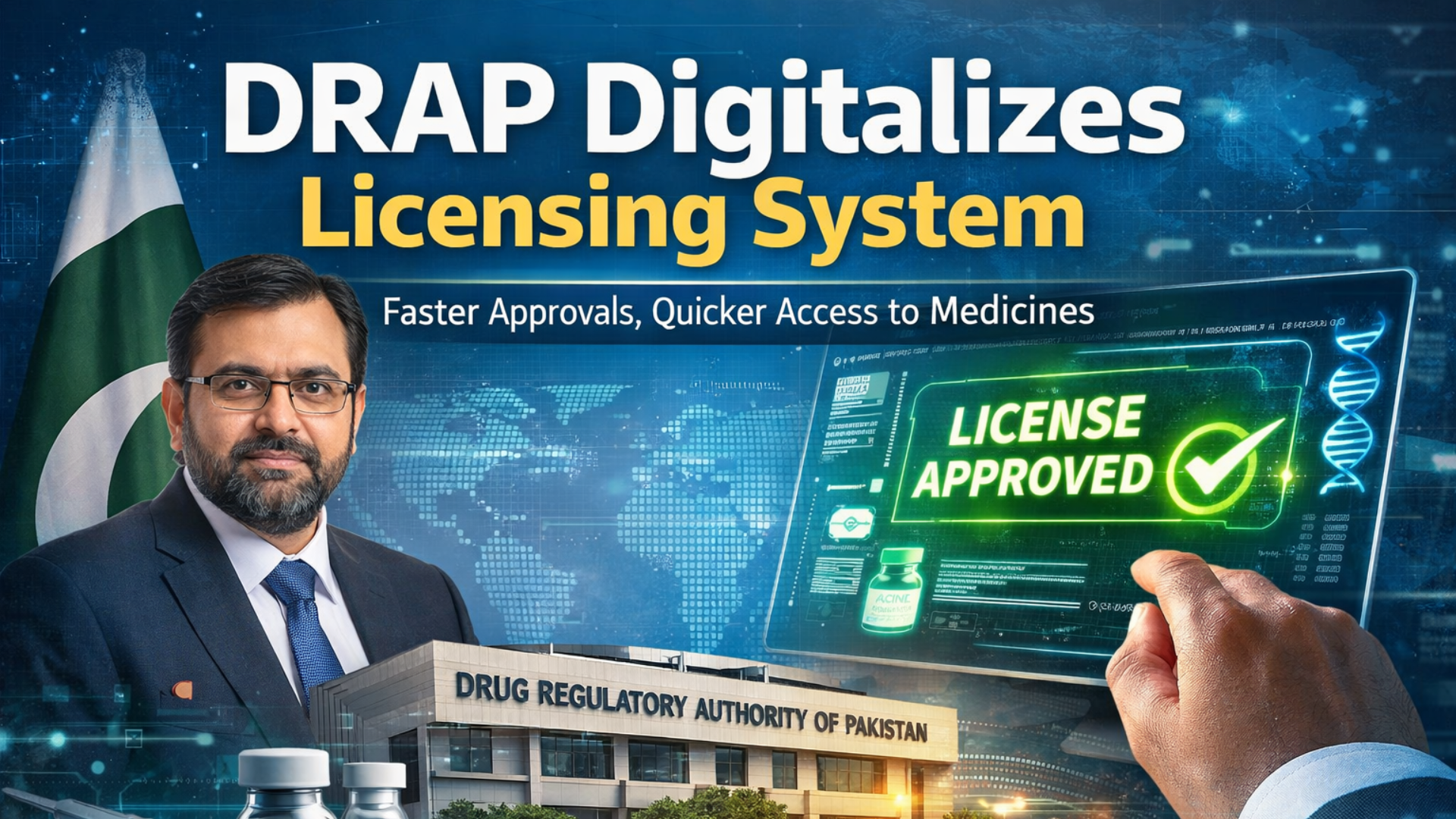

DRAP Digitalizes Licesnsing System. The Drug Regulatory Authority of Pakistan (DRAP) has introduced major reforms that have dramatically reduced licensing and approval timelines across Pakistan’s pharmaceutical and healthcare sector. Processes that once took several years are now being completed within days, following the full digitalization of DRAP’s licensing system.
This transformation marks a significant milestone for Pakistan’s healthcare regulation framework and is expected to improve access to quality medicines, vaccines, and medical products nationwide.
DRAP Licensing System Goes Fully Digital
According to DRAP Chief Executive Officer Dr Ubaidullah, the authority has undergone a fundamental shift in how it manages licensing and approvals. The most impactful change has been the transition from manual, paper-based procedures to a fully digital licensing system.
He explained that the digital platform has streamlined internal workflows, removed unnecessary delays, and significantly improved coordination between departments. As a result, licensing processes that previously faced years of backlog are now being resolved in a matter of days.
This reform represents one of the most important operational upgrades since DRAP’s establishment.
Why DRAP Digitalization Matters
For years, pharmaceutical companies, medical device manufacturers, and importers faced prolonged delays in approvals. These delays affected:
- Medicine availability
- Market entry for new products
- Investment confidence
- Supply chain stability
With the digital licensing system now in place, DRAP is addressing these long-standing challenges head-on.

The new system allows applicants to submit documentation online, track application status in real time, and receive faster responses without repeated physical visits.
Government Support Played a Key Role
Dr Ubaidullah acknowledged that the federal government’s support was critical in achieving these reforms. He said policy backing, institutional cooperation, and technology investment enabled DRAP to modernize its regulatory framework.
He reaffirmed DRAP’s commitment to continuing reforms that enhance transparency, efficiency, and public service delivery.
This collaboration between regulators and government institutions reflects a broader push toward digital governance in Pakistan.
Faster Approvals, Better Access to Medicines
One of the most significant outcomes of the digital licensing system is improved access to quality medicines. Faster approvals mean:
- Essential medicines reach the market sooner
- Supply shortages are reduced
- Patients receive timely treatment
- Healthcare providers operate more efficiently
Dr Ubaidullah noted that approval timelines have improved substantially, addressing a major concern previously raised by stakeholders in the health sector.

These changes strengthen DRAP’s ability to fulfill its core mandate: protecting public health while supporting innovation.
Strengthening DRAP Overall Performance
The reforms have not only accelerated licensing but have also improved DRAP’s overall performance. Internal coordination has improved, accountability has increased, and decision-making has become more data-driven.
By reducing dependency on manual processes, DRAP has minimized errors, improved record management, and enhanced regulatory oversight.
This positions the authority as a more responsive and modern regulator aligned with international best practices.
Progress in Local Vaccine Production
Alongside licensing reforms, DRAP is also focusing on strengthening local vaccine production. Dr Ubaidullah stated that the quality of vaccine components in Pakistan is improving, and targeted efforts are underway to expand availability.
He highlighted that Pakistan is moving closer to developing sustainable local vaccine manufacturing capacity.

International and Provincial Collaboration
Pakistan’s progress in vaccine manufacturing is being supported by:
- Provincial governments
- International partners
- Global health organizations
These partnerships aim to stabilize vaccine supply chains and reduce reliance on imports. According to DRAP, the long-term goal is self-reliance in the healthcare sector, especially for critical vaccines.
Such collaboration also helps Pakistan align its manufacturing standards with global quality benchmarks.
Impact on Pakistan Healthcare Sector
The digitalization of DRAP’s licensing system is expected to have a long-term positive impact on Pakistan’s healthcare ecosystem, including:
- Faster introduction of new medicines
- Improved regulatory trust
- Increased local and foreign investment
- Stronger public health outcomes
For pharmaceutical companies, the reform reduces uncertainty. For patients, it means quicker access to life-saving treatments.
Benefits of DRAP Digital Licensing System
The new system delivers several clear advantages:

- Reduced licensing time from years to days
- Online submission and tracking
- Improved transparency and accountability
- Faster approvals for essential medicines
- Stronger regulatory oversight
- Better coordination across departments
These benefits collectively support a more efficient and reliable healthcare supply chain.
Challenges and the Way Forward
While the progress is significant, DRAP has acknowledged that continuous improvement is necessary. System optimization, staff training, and stakeholder feedback will remain key priorities.
The authority plans to further enhance digital tools, expand automation, and align more processes with international regulatory standards.
FAQs About DRAP?
What is DRAP?
DRAP is Pakistan’s national regulatory authority responsible for overseeing medicines, vaccines, medical devices, and healthcare products.
What has DRAP changed in its licensing system?
DRAP has fully digitalized its licensing and approval processes, replacing slow manual systems.
How much time does licensing take now?
Processes that once took years are now completed within days.

Why is digital licensing important?
It reduces delays, improves transparency, and ensures faster access to medicines.
Is DRAP working on local vaccine production?
Yes, DRAP is supporting efforts to improve vaccine quality and expand local manufacturing capacity.
Who supports Pakistan’s vaccine manufacturing goals?
Provincial governments and international partners are providing technical and strategic support.
Conclusion
The decision by the Drug Regulatory Authority of Pakistan to digitalize its licensing system marks a major step forward for the country’s healthcare regulation framework. By cutting approval times from years to days, DRAP has addressed one of the most critical challenges facing the pharmaceutical sector.
With continued government support, international collaboration, and a strong focus on efficiency, DRAP is now better positioned to ensure timely access to quality medicines and vaccines for the people of Pakistan.