
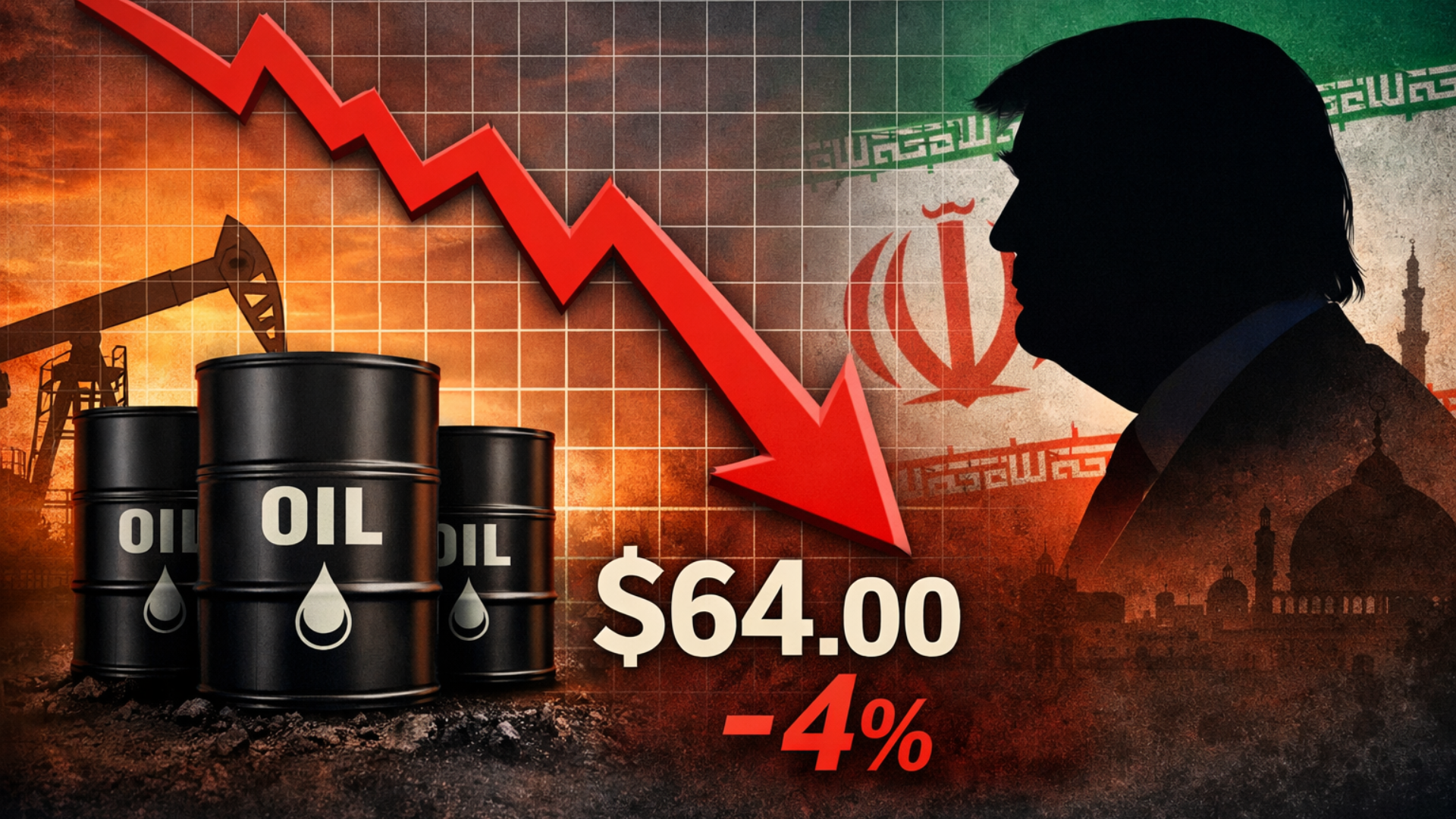

Oil Prices Plunge Nearly 4% After Trump’s Iran Comments. Oil prices took a sudden downward turn on Wednesday, plunging nearly 4% after U.S. President Donald Trump’s statements appeared to diminish the likelihood of immediate military action against Iran. This unexpected move followed recent price gains driven by escalating geopolitical tensions. The slide in crude prices reflects how sensitive global energy markets remain to developments in the Middle East.
Oil Market Context Before the Drop
In the early part of the week, oil prices had climbed significantly, reaching their highest closing levels in several months as traders priced in rising geopolitical risks around Iran. Most recently, heightened tensions and fears of broader conflict pushed benchmark crude prices higher.
Investors had been particularly focused on the possibility that direct U.S.–Iran confrontation might disrupt supply routes or even lead to a shutdown of key transit chokepoints like the Strait of Hormuz — a passage through which roughly 20% of the world’s oil supply normally travels.
All of this contributed to an energy market that was already on edge before Trump’s comments.

Trump Comments and Market Reaction
In comments that surprised many market participants, President Trump indicated that violence involving Iran appeared to be subsiding and that the United States was not planning to escalate military actions imminently. This represented a major shift from prior expectations that U.S. action could escalate regional conflict — a scenario that would likely have pushed oil prices higher.
As a result:
- Brent crude futures fell sharply by almost 4%, settling around mid-$60 per barrel.
- West Texas Intermediate (WTI) crude also retreated, as traders reassessed risk premia.
- Safe-haven assets such as gold and silver also pulled back slightly, reflecting broader easing of geopolitical concerns.
The downturn erased some of the gains from a recent rally that had seen prices rise as much as 11% over prior sessions.

Why Oil Prices Are So Reactive to Political Signals
Geopolitical Risk Premiums
Oil markets price in what analysts call a “geopolitical risk premium” — extra cost built into futures prices when conflicts could disrupt supply. Because Iran is a major member of the Organisation of Petroleum Exporting Countries (OPEC) and holds significant crude reserves, any potential threat to its output or to transit routes like the Persian Gulf can cause prices to spike.
However, when those risks appear to recede — such as in Trump’s recent comments — the extra premium is removed, and prices correct downward.
Strait of Hormuz Concerns
The Strait of Hormuz is one of the world’s most important oil transit routes. If conflict were to extend to blocking this chokepoint, oil exports from the Gulf region could be severely constrained, intensifying price volatility.

That scenario has been one of the key drivers behind recent oil rallies — but the absence of immediate escalation in early January helped ease those fears temporarily.
Other Influences on Oil Prices at the Same Time
Price movements in global oil markets are rarely driven by a single factor. At the same time as Trump’s remarks, other economic indicators and market forces also played a role.
Inventory Data
Reports showed that U.S. crude inventories were larger than expected, which usually signals weaker immediate demand or oversupply — another factor putting downward pressure on prices.

Demand Indicators in Asia
China’s crude imports surged to record levels toward the end of 2025, suggesting strong demand fundamentals in some global regions. However, strong supply from other regions — including OPEC producers — helped moderate price spikes.
U.S. Production Strength
The United States remains one of the world’s largest oil producers. That production capacity provides a buffer against overseas supply shocks, dampening the magnitude of oil price swings compared with prior eras.
What This Means for Consumers and Businesses
Short-Term Price Relief
With prices retreating nearly 4%, consumers — especially in regions reliant on imported crude — may see some short-term relief at the pump. Lower oil prices often translate into cheaper transportation and energy costs for households and businesses.

Pressure on Producers
Oil exporting nations and energy companies may face tighter margins if prices remain suppressed. Some producers could consider output cuts or changes to export strategies if prices stay low for extended periods.
Investment Outlook
For investors, volatility tied to geopolitical dynamics means energy markets will likely stay on alert. Stocks of energy companies and commodity funds may continue to reflect shifting sentiment based on political statements as much as actual supply and demand fundamentals.
Potential Risks Still on the Horizon
While recent comments eased fears temporarily, several long-term risks remain that could spark renewed volatility:
- Renewed geopolitical conflicts or military incidents
- OPEC production policy changes
- Supply disruptions caused by sanctions or infrastructure issues
- Demand fluctuations due to changes in global economic growth
The possibility that Iran could still threaten to disrupt key oil routes like the Strait of Hormuz remains a latent factor in future price movements.
Conclusion
The near-4% drop in oil prices after President Trump’s comments highlights how sensitive global energy markets are to geopolitical developments. What looks like a de-escalation in one moment can quickly shift prices, ending rallies that had been driven by fear of supply disruption.
For now, traders, producers, and consumers will be watching carefully whether tensions remain muted or escalate again later in 2026.