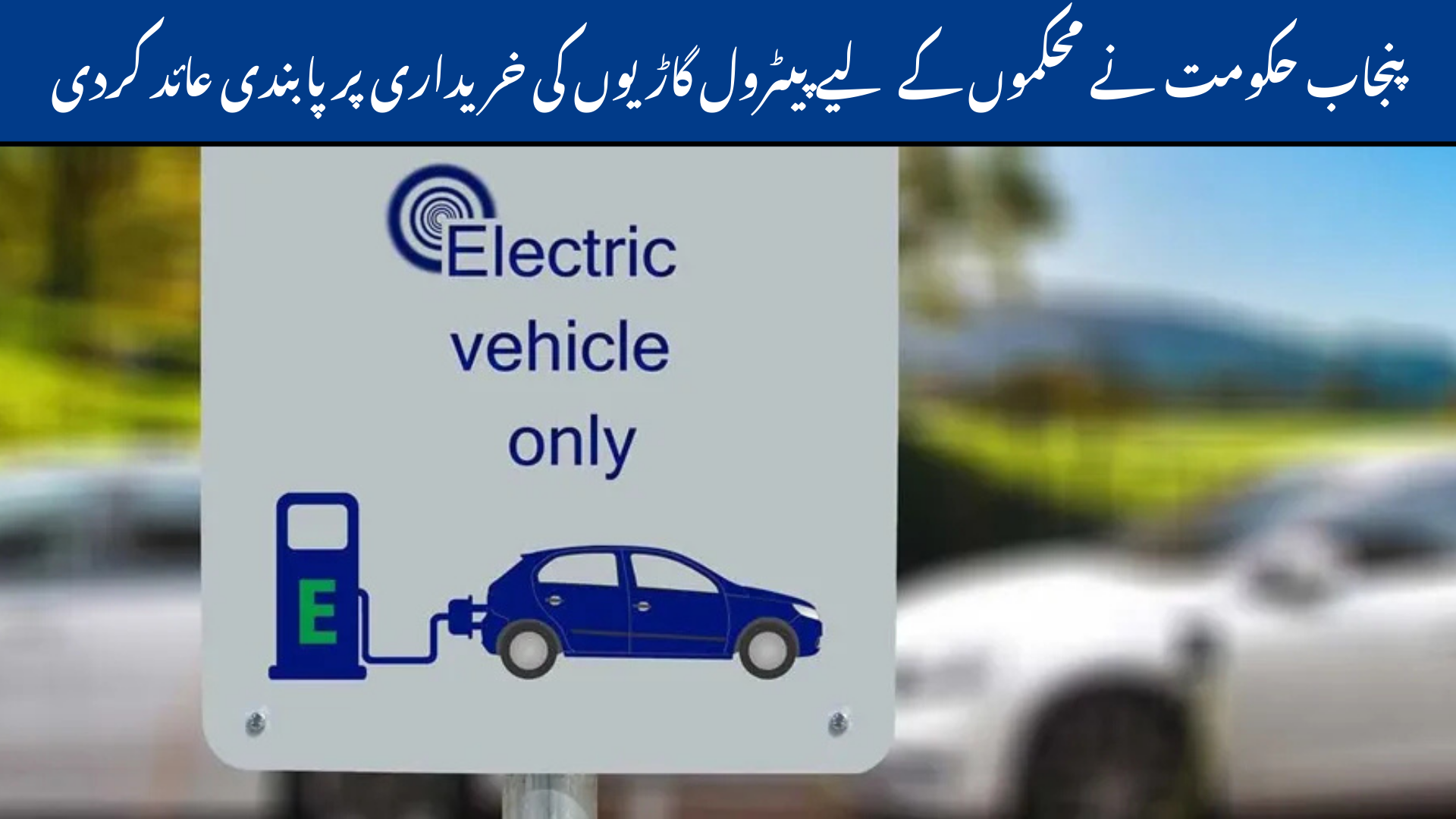

Punjab Govt Bans Procurement of Petrol Vehicles for Departments. The Punjab Government has taken a major policy step by officially banning the procurement of petrol and diesel vehicles for all provincial government departments. The decision is part of a broader strategy to shift towards cleaner transport, reduce fuel dependency, and promote environmentally responsible governance across the province.
Under the new directive, government departments will now be allowed to purchase only electric or hybrid vehicles, marking a clear transition away from conventional fuel-powered fleets.
Punjab Moves Towards Cleaner Government Transport
This policy shift was approved during a high-level meeting held in Lahore, where senior officials discussed long-term environmental and energy reforms. According to officials present at the meeting, the ban applies to all routine and administrative vehicles procured by provincial departments.
However, the government has introduced a limited exception. Vehicles required for field operations, including certain law enforcement, emergency response, and remote-area duties, will not be covered under this restriction. These operational needs will continue to be assessed on a case-by-case basis.

Policy Reflects CM Maryam Nawaz’s Green Vision
Speaking at the meeting, Marriyum Aurangzeb, Senior Provincial Minister, said the decision directly reflects the vision of Maryam Nawaz Sharif to transform Punjab into a greener, cleaner, and climate-responsible province.
She emphasized that government institutions must lead by example when it comes to sustainability. Transitioning official vehicle fleets to electric and hybrid options is seen as a practical and symbolic step toward reducing carbon emissions and modernizing public-sector operations.
Only Electric and Hybrid Vehicles Allowed
Under the new rules:

- Provincial departments cannot purchase petrol or diesel vehicles
- Procurement is limited to electric vehicles (EVs) and hybrid vehicles
- Existing petrol vehicles will continue to operate until replacement cycles
- Future fleet upgrades must comply with the new policy
This move aligns Punjab with global trends, where governments are increasingly shifting their official fleets to low-emission or zero-emission vehicles.
Petrol Pump NOCs Linked to EV Charging Stations
In a related and equally significant development, the Punjab Chief Secretary announced a new condition for fuel infrastructure approvals.
Going forward, the issuance of No Objection Certificates (NOCs) for new petrol pumps will be linked to the installation of electric vehicle charging facilities. This means:

- New petrol stations must include EV charging points
- Existing fuel stations may be encouraged to upgrade infrastructure
- Private investors will be pushed toward supporting EV adoption
This policy aims to address one of the biggest challenges facing electric mobility in Pakistan — limited charging infrastructure.
Boosting Electric Mobility in Punjab
By linking petrol pump approvals with EV charging stations, the Punjab government is creating a supportive ecosystem for electric vehicles. Experts believe this move will:
- Increase the number of EV charging points across cities and highways
- Reduce “range anxiety” among potential EV buyers
- Encourage private-sector investment in green mobility
- Support future growth of electric public transport
This infrastructure-focused approach complements the government’s vehicle procurement ban and strengthens the overall transition strategy.

Environmental and Economic Impact
The ban on petrol vehicle procurement is expected to deliver both environmental and economic benefits.
Environmental Benefits
- Reduction in carbon emissions from government fleets
- Lower air pollution levels in major urban centers
- Support for Pakistan’s climate commitments
Economic Benefits
- Reduced fuel import bill over time
- Lower long-term operating and maintenance costs
- Gradual shift away from fossil fuel dependency
Electric and hybrid vehicles, although more expensive upfront, typically offer lower running costs, which can benefit the provincial budget in the long run.
Strong Signal to the Market
Industry analysts see this decision as a strong policy signal to automobile manufacturers, investors, and infrastructure developers. When a provincial government commits to electric mobility at this scale, it:

- Encourages automakers to introduce more EV and hybrid models
- Signals long-term demand stability for clean vehicles
- Pushes innovation in charging and battery technology
The move could also influence other provinces to consider similar policies.
Challenges Ahead
While the policy has been widely welcomed by environmental advocates, challenges remain:
- Higher initial cost of EVs
- Limited local manufacturing options
- Need for trained maintenance staff
- Gradual expansion of charging infrastructure
However, officials believe these challenges can be managed through phased implementation and private-sector collaboration.
Conclusion
The decision by the Punjab Government to ban the procurement of petrol and diesel vehicles for provincial departments marks a historic shift in public-sector transport policy. By prioritizing electric and hybrid vehicles and linking petrol pump approvals to EV charging infrastructure, Punjab is positioning itself as a leader in sustainable mobility within Pakistan.
This move not only supports environmental goals but also sets the foundation for a cleaner, more energy-efficient future — with the government leading the transition by example.